
Practical insulation for everyday comfort.
Fiberglass uses fine glass fibers to slow heat transfer. Available as batts or loose fill, it can suit a range of residential and commercial spaces.
Get a Free Estimate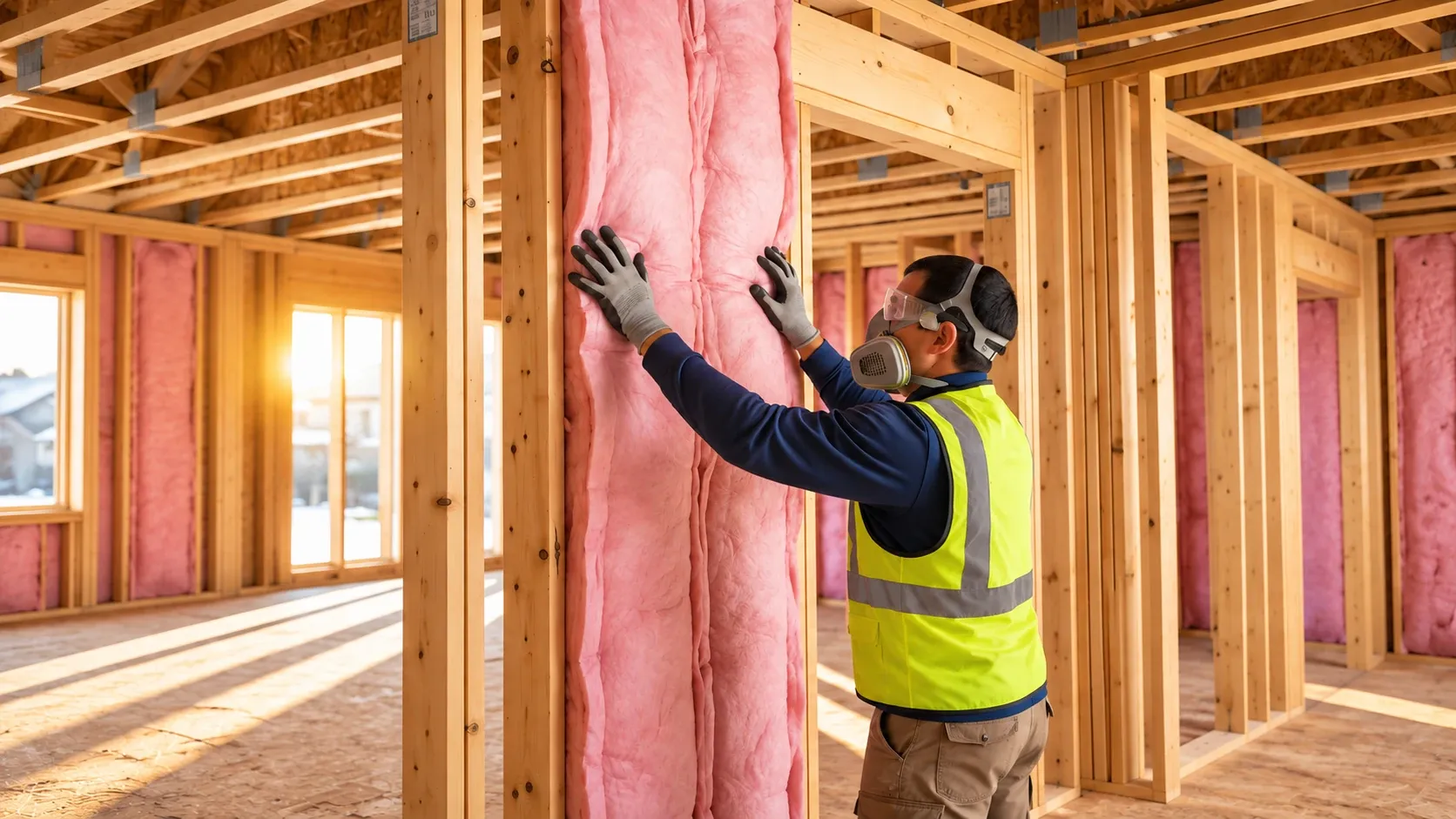
Good materials.
The right application.
Where it may be a good fit
- Accessible wall and floor framing
- Attic floors with an appropriate ventilation plan
- New construction and open-wall renovation projects
What to consider
Batts need to fit the cavity without gaps or excessive compression. Pipes, wiring and uneven framing need particular attention.
Fiberglass does not replace air sealing. Air leaks should be addressed as part of the overall insulation plan.
Existing dampness and roof leaks should be resolved first. Facing and vapor-control needs depend on the assembly.
Compare all three materialsGood questions. Clear answers.
Does fiberglass seal air leaks?
The material slows heat transfer but is not an air barrier. Separate air-sealing work may be appropriate around penetrations and other leaks.
Should old insulation be removed?
Not always. Its condition, moisture, contamination and the planned assembly matter. Have the existing material assessed before adding insulation.
Where do batts work well?
Batts are often suited to accessible, regularly spaced framing. A careful fit around obstructions is important for consistent coverage.
Let’s make your space more comfortable.
Tell us a little about your property. Not sure which insulation you need? That’s a good place to start, too.